Everything You Need to Know About Diabetes: Prevention, Symptoms, and Treatment — A Complete, Friendly Guide
Diabetes. It’s a word we all hear often, yet many people don’t fully understand what it means, how it affects the body, or what they can do to prevent and manage it. Maybe you have a family member who has diabetes. Maybe you’ve been told your blood sugar is “a little high.” Or maybe you simply want to understand this condition better so you can stay healthier in the long run.
Whatever your reason, this guide is here to explain diabetes in the most relaxed, easy-to-follow, and practical way possible — without complicated medical jargon or scary lectures.
Grab a drink (preferably not a sugary one 😉), sit back, and let’s break it all down:
what diabetes is, how it works, what symptoms to watch for, how to prevent it, and what treatment looks like — all in one complete, conversational guide.
- What Exactly Is Diabetes? (Simple and Friendly Explanation)
Diabetes is a chronic condition where your body struggles with managing blood sugar (glucose). Your body needs glucose for energy, but it also needs insulin, a hormone produced by the pancreas, to move that glucose into your cells.
Here’s the simple version:
- You eat food → it becomes glucose → glucose enters the bloodstream
- Insulin is like a key that unlocks your cells → glucose enters the cells → you get energy
But in diabetes, something goes wrong with this process.
The two biggest problems are:
- Your body doesn’t produce enough insulin
- Your body doesn’t use insulin effectively (this is called insulin resistance)
Either way, glucose gets stuck in the bloodstream, causing high blood sugar — and that’s where the problems start.
Long-term high blood sugar can affect:
- your heart
- your kidneys
- your eyes
- your nerves
- your blood vessels
- your immune system
But the good news? Diabetes is manageable, treatable, and preventable in many cases — especially when you understand it well.
- The Main Types of Diabetes (Explained Super Clearly)
There are three major types of diabetes you should know about.
- Type 1 Diabetes
This is when the body cannot produce insulin at all. The immune system mistakenly attacks the pancreas, destroying the cells that make insulin.
- usually develops in childhood or teenage years
- not caused by lifestyle
- requires insulin injections for life
It’s less common (about 5–10% of all diabetes cases).
Think of Type 1 diabetes as:
“The body doesn’t make insulin anymore.”
- Type 2 Diabetes
This is the most common type — about 90% of cases worldwide.
In Type 2 diabetes:
- the body doesn’t use insulin properly (insulin resistance)
- over time, the pancreas struggles to produce enough insulin
- blood sugar stays high
Type 2 diabetes is influenced by:
- genetics
- diet
- lifestyle
- weight
- age
- activity level
Think of Type 2 diabetes as:
“The body still makes insulin, but it doesn’t work well.”
The good news? Type 2 diabetes can be prevented, controlled, and sometimes even reversed through lifestyle changes.
- Gestational Diabetes
This happens during pregnancy when hormones make the body less responsive to insulin.
- usually disappears after birth
- increases the mother’s risk of future diabetes
- increases the baby’s risk of obesity and diabetes
Bonus: Prediabetes
Prediabetes means your blood sugar is higher than normal, but not high enough for a diabetes diagnosis.
It’s like a warning sign—and the perfect time to make lifestyle changes.
- Causes of Diabetes (Why It Happens)
Diabetes doesn’t come from one single cause — it’s usually a mix of genetics, lifestyle, and health factors.
Let’s break it down clearly.
- Genetics and Family History
If you have family members with diabetes, your risk goes up. You can inherit insulin resistance, pancreatic issues, or metabolic tendencies.
- Unhealthy Eating Habits
Consistently eating:
- sugary drinks
- refined carbs
- processed foods
- fried foods
- fatty meats
- excessive sweets
…can increase your risk over time.
It’s not about one bad meal — it’s about long-term habits.
- Lack of Exercise
Physical activity helps your body use insulin properly. Without movement, insulin resistance increases.
- Being Overweight (Especially Belly Fat)
Visceral fat around the abdomen interferes with insulin’s role in the body, leading to insulin resistance.
- Age
The risk increases after age 40 — but younger adults and even teenagers are now developing Type 2 diabetes more often due to lifestyle factors.
- Stress and Poor Sleep
Chronic stress releases cortisol, a hormone that raises blood sugar.
Lack of sleep messes with hormones that control hunger and metabolism.
- Certain Medications and Conditions
Conditions like:
- PCOS
- high cholesterol
- high blood pressure
…can increase your diabetes risk.
- Symptoms of Diabetes (What to Look For)
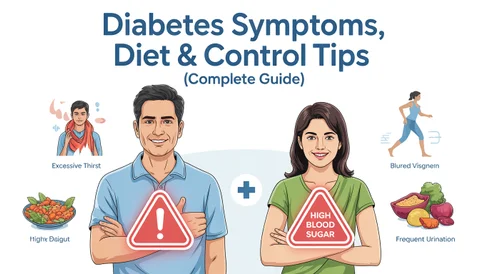
Diabetes often develops slowly — especially Type 2. Many people don’t know they have it until symptoms become more noticeable.
Here are the most common signs.
- Frequent Urination
The body tries to get rid of excess sugar through urine.
- Constant Thirst
Because you urinate more, you become dehydrated.
- Increased Hunger
Cells aren’t getting enough glucose → your brain says, “Eat more!”
- Unexpected Weight Loss
More common in Type 1 diabetes.
- Fatigue and Low Energy
Cells starve without glucose.
- Blurred Vision
High sugar affects the eye’s lens.
- Slow-Healing Wounds
Cuts, bruises, and infections take longer to heal.
- Frequent Infections
Yeast infections, gum infections, skin infections.
- Tingling or Numbness
High sugar damages nerves (neuropathy).
If you recognize these symptoms, a check-up is a smart idea — simple blood tests can show early signs.
- How Diabetes Affects Your Health (Short-Term and Long-Term Effects)
Unchecked diabetes can lead to complications — but let’s talk about them calmly and realistically.
The goal is not to scare you, but to help you understand why early detection and management matter.
Short-Term Problems
- fatigue
- blurry vision
- dehydration
- dizziness
- mood swings
These often improve with proper blood sugar control.
Long-Term Problems (If Blood Sugar Stays High for Years)
- Heart Disease
High sugar damages blood vessels.
- Kidney Damage
The kidneys work overtime filtering excess glucose.
- Vision Issues
Diabetic retinopathy can cause vision loss.
- Nerve Damage (Neuropathy)
Causing numbness, tingling, pain.
- Foot Problems
Reduced circulation slows healing.
- Dental Issues
High sugar harms gums.
- Increased Infections
Weakened immune function.
Here’s the good part:
Most of these complications are preventable with early care and lifestyle changes.
- Prevention: How to Reduce Your Risk of Diabetes
Prevention is powerful. Small, daily habits can dramatically lower your risk — especially for Type 2 diabetes and prediabetes.
Here’s what works.
- Eat a Balanced, Healthy Diet
Try to include:
- vegetables
- fruits
- whole grains
- lean proteins
- healthy fats
- nuts and seeds
Limit:
- sugary drinks
- pastries
- white bread
- fried foods
- fast food
- processed snacks
It’s not about dieting — it’s about moderation and consistency.
- Move More (Exercise Helps Insulin Work Better)
Exercise improves insulin sensitivity.
Try:
- walking
- jogging
- swimming
- dancing
- weight training
- yoga
Aim for at least 150 minutes a week.
- Maintain a Healthy Weight
Even losing 5–10% of your body weight can dramatically reduce risk.
- Sleep Well
Aim for 7–9 hours.
Poor sleep increases appetite and insulin resistance.
- Manage Stress
Chronic stress raises hormones that increase blood sugar.
Try:
- breathing exercises
- meditation
- hobbies
- journaling
- nature walks
- talking to someone
- Limit Alcohol and Quit Smoking
Both can raise your diabetes risk and worsen complications.
- Get Regular Health Checkups
Early detection is easier to manage.
Tests to consider:
- fasting blood sugar
- A1C
- oral glucose tolerance test
- Treatment: How Diabetes Is Managed
Treatment depends on the type, severity, and health condition of each person. But here’s the general breakdown.
- Healthy Lifestyle Changes (Always the First Step)
Diet, exercise, sleep, and weight management are the foundations of diabetes care.
Even with medication, lifestyle changes remain essential.
- Medication (If Needed)
There are various medications to:
- improve insulin sensitivity
- lower blood sugar
- slow carbohydrate absorption
- help the pancreas release insulin
A healthcare professional will determine the best option.
- Insulin Therapy
Necessary for:
- Type 1 diabetes
- some Type 2 diabetes cases
Insulin can be injected or delivered via pump.
- Monitoring Blood Sugar
Helps track patterns and adjust lifestyle or medication.
Devices include:
- glucometers
- continuous glucose monitors (CGMs)
- Education and Support
Many people benefit from:
- nutrition counseling
- diabetes educators
- support groups
Living with diabetes is easier when you’re not alone.
- Natural Ways to Support Healthy Blood Sugar
Although these don’t replace medical treatment, they can support overall health:
- cinnamon
- green tea
- apple cider vinegar
- fiber-rich foods
- chromium (with professional advice)
- omega-3 fatty acids
Always check with a healthcare professional before taking supplements.
- Diet Tips for People With (or at Risk of) Diabetes
Reduce these foods:
- sugary drinks
- candy, pastries
- white bread, white rice
- fried foods
- processed meats
- heavy sauces
Increase these foods:
- leafy greens
- nuts
- seeds
- whole grains
- eggs
- lean meats
- Greek yogurt
- berries
- beans
Smart eating habits:
- don’t skip meals
- watch portion sizes
- choose whole instead of refined carbs
- drink plenty of water
- balance every meal with carbs + protein + healthy fat
- Living Well With Diabetes (Yes, You Absolutely Can)
Diabetes doesn’t have to limit your life.
Thousands of people manage it successfully while living full, active, joyful lives.
With the right knowledge, habits, and support, you can:
- eat delicious meals
- maintain energy
- avoid complications
- exercise normally
- enjoy social life
- travel freely
The key is understanding your body, making mindful choices, and staying consistent.
- Conclusion: Understanding Diabetes Is the First Step to Prevention and Control
Diabetes may be common, but it is not unavoidable.
It is not the end of your freedom.
It is not a life sentence of restrictions.
When you understand how diabetes works — the symptoms, causes, and treatment options — you gain the power to take control of your health.
Small changes truly matter:
- moving more
- eating smarter
- drinking more water
- sleeping well
- reducing sugar
- managing stress
Whether you want to prevent diabetes, manage prediabetes, or live well with an existing diagnosis, this guide gives you everything you need to take confident, positive steps.
Your health is in your hands — and every healthy choice you make today is an investment in a stronger, happier future.